
How to Read Greens: A Simple Step-by-Step Guide for Better Putting (2026)

Reading a green isn't just about finding which way the putt breaks. A good read starts with a few big clues: the overall slope, the speed of the green, the direction of the break, and—when it matters—the grain of the grass.
The key is knowing what to look for and in what order.
In this guide, we'll discuss how to read greens. Walking through a simple green-reading routine you can use on the course, explain why speed changes the amount of break, and show you how to avoid some of the most common mistakes golfers make on the green. Also, talk about how eyewear can affect your view.

How to Read Greens Step by Step: Start With What You Can See
Before worrying about a perfect putting line, start with the big picture. Reading a green becomes much easier when you move from large clues to small clues, rather than trying to see everything at once.
Step1: Look at the Whole Green Before You Reach Your Ball
As you walk toward the green, look at the overall shape of the putting surface and the land around it. Ask yourself:
- Which side of the green looks higher? Which side looks lower?
- Does the entire green appear to sit on a larger slope?
- Where would water naturally drain?

A useful beginner trick is to imagine pouring a bucket of water onto the green. Which direction would the water flow? That direction gives you a simple clue about the overall fall of the green.
Do not worry about the exact putting line yet. At this stage, you are only trying to understand the big picture.
Step2: Look for Slope, Texture, and Visual Contrast
At this point, you do not need to interpret every detail. Use these following smaller visual clues to confirm the overall slope you noticed when approaching the green. Later, we'll look more closely at how green speed and grain can affect the way your ball rolls.
Look for:
- Subtle changes in elevation
- High and low areas
- Changes in grass texture: Differences across the surface can give you additional clues about how the green may play.
- Shadows: Strong shadows can sometimes make a slope look steeper or flatter than it really is.
- Light and dark patterns

This is where light and contrast become just as important as slope itself. On many greens, what you think you see is heavily influenced by glare, shadow, and how the grass reflects sunlight. A putt can look flatter or more severe simply because the surface is harder to read visually, not because the slope actually changes.
What You Wear Can Affect What You See
Green reading depends on noticing subtle visual details across the course. Bright sunlight, glare, and shifting shadows can reduce contrast and make it harder to see slope and texture clearly.
This is where lens choice can help. Different tints and polarization levels change how much contrast you see and how much glare is reduced.
If you often play in very bright conditions, golf-specific eyewear can simply make reading greens more comfortable and consistent.
Made for Long Days on the Course
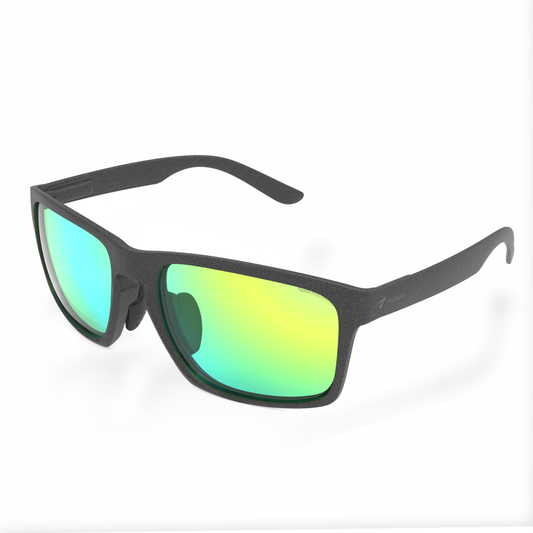
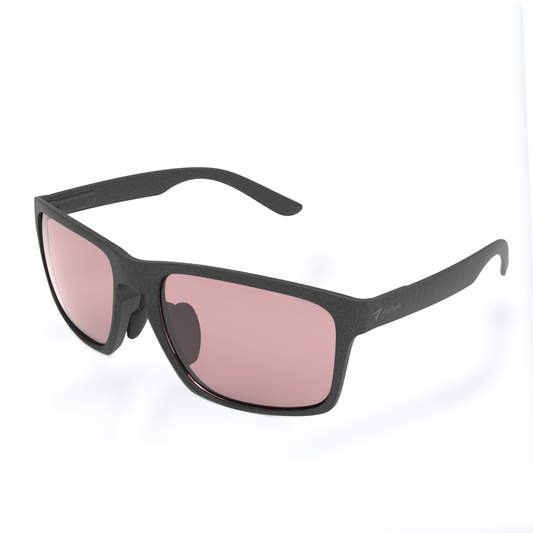
Agape Birdyx™ golf sunglasses combine a red base tint with polarized mirror coatings designed for bright outdoor conditions, which help sharper the green.


The lightweight Agape Birdyx™ Carbon firm hold, and refined everyday comfort for long rounds on the courses.

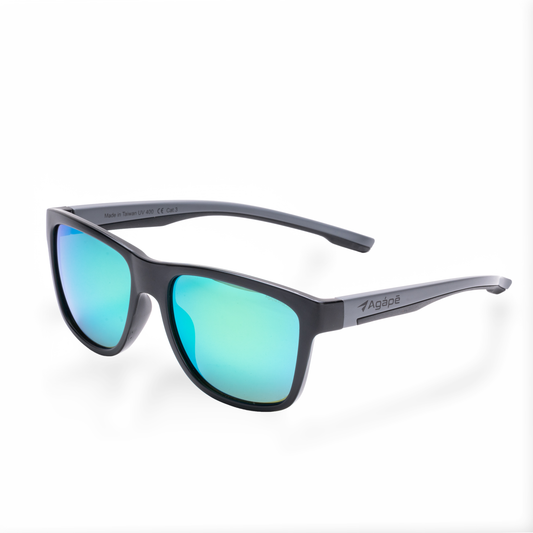
The DuraFlex frame featured the flexible rubber frame grips tight, no matter how hard you play.


Choose Your Lens
-
agape Birdyx™ Carbon GreenSight
Regular price $59.99 USDRegular priceUnit price per$64.99 USDSale price $59.99 USDSale -
agape Birdyx™ Carbon Noir
Regular price $59.99 USDRegular priceUnit price per$64.99 USDSale price $59.99 USDSale -
agape Birdyx™ DuraFlex Rubber GreenSight
Regular price $42.50 USDRegular priceUnit price per$47.50 USDSale price $42.50 USDSale -
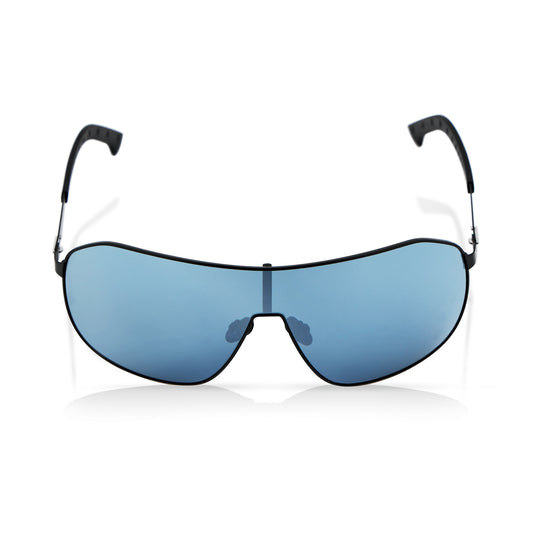
Ace™ AeroSteel - ProSight Golf Sunglasses Gift Set|Agape Golf
Regular price $529.00 USDRegular priceUnit price per$599.00 USDSale price $529.00 USDSale




Not sure whether polarization is right for your game? Read our guide to Are Polarized Sunglasses Good for Golf?
Step3: Read the Putt From Behind the Ball
Now move behind the ball and look toward the hole.
This is where you begin narrowing your read.
Ask:
- Is the putt uphill or downhill?
- Does the ground fall left or right?
- Is there one large break or several smaller changes?
- Where does the ball appear most likely to begin turning?
Golf Digest has also recommended stepping farther behind the ball than many golfers normally do. Viewing the putt from farther away can make the larger slope of the green easier to recognize before you focus on smaller details.
Try to picture the complete path of the ball rather than drawing a straight line between your ball and the cup.
On a breaking putt, the ball usually cannot be aimed directly at the center of the hole. You need to choose a starting direction that allows gravity and the slope to bring the ball back toward the target.
Step4: Check the Low Side
For a breaking putt, move to the low side of the expected line and look across the slope.
Why?
A side view often makes changes in elevation easier to recognize than looking straight down the putting line. Golf instruction from players and coaches has long used the low-side view as a way to better see the overall amount of break.
For most recreational golfers, a simple routine is enough:
Overall green → Behind the ball → Low side → Final look
Too many angles can sometimes create more doubt rather than more information.
Step5: Feel the Slope With Your Feet
Your eyes are not your only green-reading tool.
The basic but most practical principle: your body can sometimes sense a small slope that is difficult to see.
Step6: Pay Extra Attention Near the Hole
One of the most important areas to read is the final part of the putt.
As a golf ball slows down, the slope has more time to influence its direction. That means the final few feet of a putt can show a more noticeable break than the earlier, faster portion.
When you study the area around the hole, look for:
- the direction the surface falls
- whether the putt becomes more uphill or downhill
- any late break
- obvious grain around the cup
A putt that looks fairly straight from the ball may still move significantly as it loses speed near the hole.
This is one reason golfers often misread putts even when their starting direction looks good.
How Speed and Grain Affect Your Read
Slope tells you where gravity wants to move the ball.
Speed determines how much time gravity gets to do it.
That relationship is one of the most important things to understand about reading greens.
Speed Changes How Much a Putt Breaks
Imagine two golfers hitting the same breaking putt.
The first player hits the ball firmly.
The second player tries to roll the ball so it reaches the hole at a much slower pace.
They should not necessarily use the same line.

A firmer putt generally spends less time being influenced by the slope, so it tends to take less break.
A softer putt is moving more slowly and gives gravity more time to move it downhill, so it generally needs more break.
Faster pace → Less break
Slower pace → More break
This leads to one of the most useful green-reading principles:
There is no single "correct line" without a chosen speed.
This is also why practicing green speed before a round is useful. Greens can vary significantly from course to course—and even change during the day because of weather, moisture, turf growth, traffic, and maintenance conditions.
How to Read Grain on a Golf Green
Grain refers to the direction in which the grass leaves tend to grow or lie.
When grain is noticeable, it can affect both ball speed and break. The USGA notes that putts can roll faster with the grain and slower against the grain, and grain can also increase the break of a sidehill putt.
Grain is especially worth checking on surfaces where it is visually obvious, including many Bermuda greens or other grain-heavy putting surfaces.

A few clues can help:
1. Look at the Grass Color and Shine
With the grain
- Grass may look lighter, shinier, or slightly more reflective in the sunlight
- The ball may roll a little faster and feel smoother off the face
- The surface can appear more “uniform” or less textured
Against the grain
- Grass may appear darker or more matte
- The ball may slow more quickly and feel slightly “grabby”
-
The surface can look rougher or more textured
2. Check the Cup Edge
 If it is difficult to see the grass color clearly—especially in bright sunlight or on greens with strong visual glare—look instead at the cup edge.
The condition of the grass around the cup can provide another clue. One side of the cup may appear more worn or ragged depending on the direction the grass is growing.
3. Consider the Grass Variety
- Bermuda (Usually used as the main turf) or grain-heavy greens: grain patterns are often more pronounced and can strongly influence how the ball finishes.
- Cool-season greens or tightly mown surfaces: grain is usually less visible, and slope tends to be the dominant factor.
For beginners, keep it simple: slope first, speed second, and grain when it's noticeable.
On many greens, overall slope and pace will have a much bigger influence on your putt than a subtle grain pattern.
Turn Your Green Read Into a Putting Line
Choose Your Intended Speed First
Before choosing where to aim, decide how you want the ball to arrive at the hole.
On the same breaking putt, a firmer pace generally requires you to play less break, while a softer pace requires more. That means two golfers can choose different starting lines and still make the same putt.
Once you have chosen your pace, you can select a starting line that matches it.
Speed and line are not separate decisions. Your intended speed helps determine your starting line.
Pick a Starting Line or Apex
Instead of staring only at the hole, find a point where you want the ball to start.
On a breaking putt, that might be:
- a spot a few inches outside the cup
- a discoloration on the green
- a blade of grass
- an imaginary target along your starting line
For larger breaks, some golfers also visualize an apex—the high point of the curved path before the ball begins moving more noticeably toward the hole.
Imagine a right-to-left putt.
You are not trying to roll the ball directly toward the cup.
Instead:
Ball → Starting Line → Apex → Hole
That makes a curved putt easier to visualize as a simple starting target.
Trust Your Read
Once you have chosen your speed and line, commit to them.
One common problem happens when golfers finish their read, stand over the ball, suddenly feel that something looks wrong—and change direction at the last second.
At that point, you are often reacting to uncertainty rather than new information.
If something genuinely changes your read, step away and restart your routine.
Otherwise, trust the information you gathered and focus on rolling the ball over your chosen starting point at the intended speed.
Common Green-Reading Mistakes Beginners Make
You don’t need a perfect read—just avoid a few key mistakes to improve consistency.
Relying on One Angle
Don’t judge the putt only from behind the ball. Use a few views (behind, low side, walking in) to confirm the slope.
Ignoring Speed
Even a good read fails with the wrong pace. Practice different distances before your round to understand today’s green speed.
Underestimating Break
Most beginners don’t aim high enough. If unsure, favor the high side and trust gravity.
Overthinking Grain & Shadows
Grain, light, and shadows can mislead you. Always start with slope first, then speed, then break.
Second-Guessing at Address
Decide before you step in. If you keep changing your mind, your stroke loses confidence.
Read it. Commit. Putt.
Do Golf Sunglasses Really Work? (For Beginners)
Good golf sunglasses help read greens better.
They reduce glare, improve contrast, and make slopes and subtle breaks easier to see. This is especially useful on bright days when shadows and reflections can distort your read.
Check out our "Best Golf Sunglasses Picks for beginners" to learn more.
Final Takeaway for How to Read Greens: Read the Big Picture First
Learning how to read greens does not mean analyzing everything at once.
Start simple:
- Look at the entire green.
- Find the high and low sides.
- Read the putt from behind the ball.
- Check the slope from the low side.
- Use your feet to confirm subtle elevation.
- Pay attention to the final section near the hole.
- Choose your speed before deciding how much break to play.
- Check grain when it is noticeable.
- Pick a starting point and commit.
You may not read every putt perfectly—but you will be making your decisions for a reason instead of guessing.
See the Course Your Way
Reading greens starts with knowing what to look for. Your eyewear is only one part of that equation, but the right fit and lens choice can make long hours outdoors more comfortable.
If you are comparing lens colors, polarization, and golf-specific eyewear, explore Agape's guide to the best golf sunglasses before choosing the option that fits the conditions you play in most often.
